Brazil's telecom regulator wants one short code per company. What changes for SMS senders
Published in Brazil's Official Gazette on November 4, 2026, the decision orders mobile operators to build a public directory of short codes and to block anything that is not in it. The part that touches day-to-day operations is different: a short code will belong to a single company. This article separates what is confirmed from what is still open, and says how CCX Messages sends SMS today.
 CCX ProductProduct · Channel rules · Nov 9, 2026 · 11 min read
What you'll take away
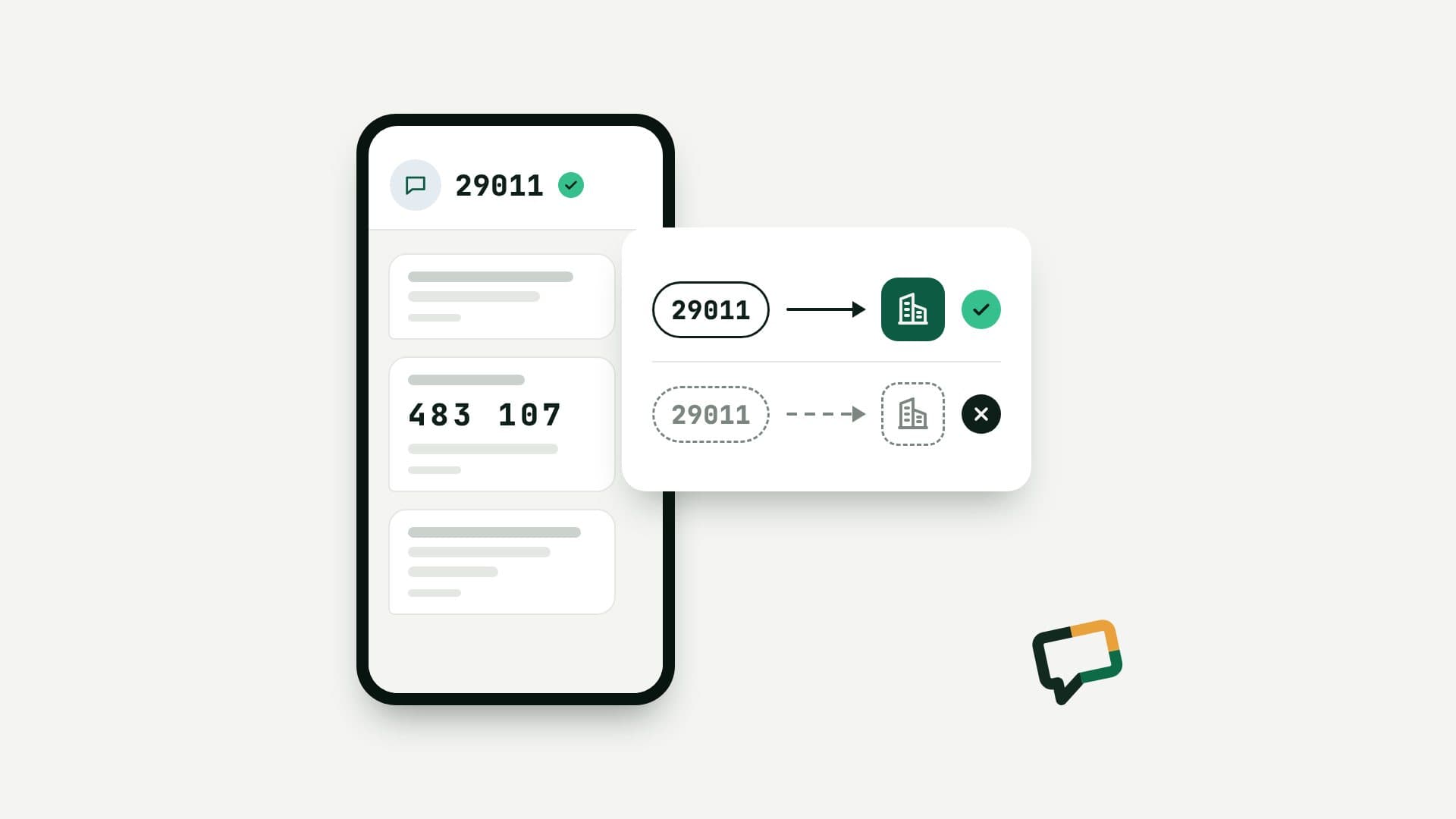
- Brazil's Ministry of Communications sums up the rule in one sentence: each short code must be linked exclusively to a single company. Operators will block messages coming from unregistered codes.
- The deadlines cited are 60 and 90 days. The decision took effect on November 4; counting from there, the dates are January 3 and February 2, 2027.
- Trade outlet Teletime, citing the order, reports an exception for shared use, with technical justification, as long as every user of the code is identified. The official statements from Anatel and the ministry mention no exception, and that difference decides the future of shared routes.
- At CCX Messages, premium SMS goes out today on a shared short code, with the brand at the start of the text. Anyone who needs an exclusive code can contract a dedicated LA separately.
What Anatel decided
The board of Anatel, Brazil's telecom regulator, unanimously approved a set of measures for A2P SMS and published them in a ruling on November 4, 2026. A2P SMS is the message a system sends to a person's phone: the verification code, the delivery notice, the bill reminder, the promotion. The main measure is the adoption of dedicated short codes, so that different companies do not share the same identifier. With it comes a centralized directory, open to free public lookup, listing the codes, the aggregators and the brands responsible for the messages. Operators answer to the agency for identifying the actual user of each code.
The harder consequence comes with it. According to the Ministry of Communications, operators must block messages sent from unregistered codes, and Teletime adds that this deadline can be extended by 30 days with justification. The obligation does not stop at operators: originators, aggregators and integrators will have, according to what each one does, to identify those responsible for messages, verify that campaigns are legitimate, preserve records and cooperate in investigating fraud. The ruling also covers automated traffic monitoring and measures for applications used in critical communications, such as authentication and credential recovery.
The stated reason is fraud. The ministry cites a survey by Cetic.br, the Brazilian internet research center, in which 71% of the identified scam attempts came by SMS. That is a share of attempts people noticed, not of money lost, and it should be read that way. The decision also calls for an assessment report from Anatel's Executive Superintendence within 180 days and for a public call for input on the A2P ecosystem, which suggests this act will not be the last word on the subject.
What a short code is, and why it became the problem
A short code is the number of a few digits that appears as the sender of a business SMS. In the Brazilian market the same resource is usually called an LA, for Large Account, and that is the name that shows up in contracts. It differs from an ordinary mobile number: it was built for volume, it travels over a route contracted with the operators, and the person receiving the message rarely knows who is behind it.
There is a chain between the company and the handset. The store hires a platform, the platform talks to an aggregator, and the aggregator holds contracts with the operators. This decision follows Ruling No. 201 of August 14, 2025, which ordered a governance plan for sending SMS in Brazil. In January, Teletime reported that ABR Telecom, the industry association that runs number portability, was preparing to centralize a directory of short code contracts, with the idea of tracing the chain down to the end user, and in June the association said it intended to launch the registry by the end of 2026. Anatel's statement does not name who will run the directory.
Now the mechanism. When a single code serves many companies, the bank, the clinic and the clothing store, the number stops saying who is speaking. For the operator, it is traffic under one contract. For the person, it is a number that sent something legitimate yesterday, which makes today's message look trustworthy. A fraudulent message that enters by this route inherits the reputation of all the others. Tying one code to one company goes straight at that problem: the number points to someone again.
Is sharing over? It depends on one detail
Anatel's statement is categorical: dedicated codes, so that different companies do not share the same identifier. The Ministry of Communications says the same thing in another sentence: each code linked exclusively to a single company. Read on their own, those lines end the model in which several customers send from the same number. It is the natural model for low-volume senders, because it spares them from contracting their own numbering.
Teletime, citing the order published in the Official Gazette, adds a detail the two official statements leave out: exceptions may be allowed on technical justification to the agency, as long as every user of the code is identified in the registry. The same article gives 60 days for exclusivity. The ministry lists the 60 days for security policies and monitoring, and 90 days for the directory, registration and blocking. The two lists can coexist, but the exception changes the plan: without it, shared codes have to end; with it, they can continue with everyone identified and the agency on board.
A caveat about this article itself belongs here. It was written from the official statements of Anatel and the ministry and from specialist coverage, not from the full text published in the Official Gazette, which is what settles these details. Teletime says the decision took effect on November 4, but none of the sources states outright when the deadlines begin, and none deals with alphanumeric senders, long numbers or RCS. Anyone making a contractual decision should read the ruling, case number 53500.104806/2025-68, or have legal counsel read it, before changing a route.
The argument against the rule is a good one
Shared short codes were not born of carelessness. They exist because dedicated numbering comes with a contract, an activation period and a fixed cost that make no sense for someone sending a few hundred messages a month. The bakery that texts when an order is ready is not going to contract a short code. If exclusivity applies with no exception, the predictable effect is to push small senders out of business SMS, or onto worse routes, and that protects nobody.
There is a second argument: fraud does not depend on short codes. Someone blasting scams from an ordinary SIM card never touches a directory. Anatel orders operators to prevent sending through untrusted channels, but its statement does not say which ones. The rule may well tighten the legitimate channel, where contracts and identification already exist, while part of the fraud keeps running outside it. People making this case are not defending scammers. They are asking who ends up paying for the fix.
The answer in favor of the rule is just as concrete. Today, someone receiving an SMS has no way of knowing who uses that number, and the directory changes this while asking nothing of consumers beyond a lookup. Exclusivity is what makes blocking work: there is little point in taking down an abused code if every legitimate company on the same number goes down with it. With one owner per code, you can punish the abuser without hitting the neighbor. Our reading is that identification is the real gain, and that the exception Teletime cites, if it is really in the act, keeps small senders in the game without giving that up.
How CCX Messages sends SMS today
This part has to be here, because the question this article tells you to ask your vendor applies to us as well. At CCX Messages, premium SMS goes out on a shared short code, with the customer's brand at the start of the text. The sender ID has 1 to 11 characters and is validated with a code sent to a verification phone. It is the default path because it does not require contracting any numbering.
CCX also provides a dedicated LA, contracted separately and in writing. In that case the code belongs to one company, which is the arrangement the rule describes. In the API and the dashboard, the la_dedicada route sits next to premium and otp, and it is refused until the contract is in place, so nobody finds that out after hitting send. Pricing is on request and is not part of the public price list.
What this page does not claim: that the shared route will continue after the deadlines, or that it will end. That depends on the text of the act, on the exception and on how operators apply the rule in practice. Anyone sending significant volume, or messages that cannot fail, has an exclusive-use path available today and does not need to wait for that answer to get organized.
What to do before the date
The first step is knowing where your messages actually go out, and that tends to be harder than it sounds. Companies with more than one tool send under different contracts: the billing system through one vendor, marketing through another, verification codes through a third. Each of those paths has its own code. Before arguing about deadlines, it is worth building a list with three columns: which system sends, through which vendor and on which code.
The second is to treat blocking as an error your system has to recognize. None of the sources says what status comes back to the sender when an operator stops an unregistered code. It could be a clear rejection, a generic failure or silence. A company that only watches total messages sent will find out from its customers. It is worth tracking delivery rate by code and by operator in the weeks before the date, so that you have something to compare against.
The third is to decide what happens to the message that has to arrive. Login codes, payment reminders and appointment confirmations need a second path defined before the switch, whether that is another channel or another route. At CCX Messages, fallback is a field on the send itself, for example SMS and then push. With any vendor the question is the same: if this channel fails at three o'clock on a Tuesday afternoon, who finds out and what goes out instead?
What would make us rewrite this page
Three things. The first is the full text confirming or contradicting the exception for shared use with every user identified. The second is a definition of when the deadlines start, because January 3 and February 2, 2027 are our own arithmetic from the day the decision took effect and not something the sources state. The third is the publication of the directory's operating rules, including who runs it and who registers the company.
The announced call for input could also change the picture, and it is an opportunity for people who operate SMS to say what the rule does in practice. Small senders, aggregators and platforms hold information the regulator does not: how long a code takes to activate, who gets left out, what happens to the traffic that is stopped. It is worth watching for the opening on the agency's website.
When any of these points changes, this page will be corrected and the date of the change noted. Regulation read through summaries tends to age badly, and this subject is on a short clock. If you find something in the act that contradicts what is written here, reach out through the site: a correction is worth more than defending the text.